EN
EN  AR
AR PT
PT KO
KO DE
DE TR
TR FR
FR

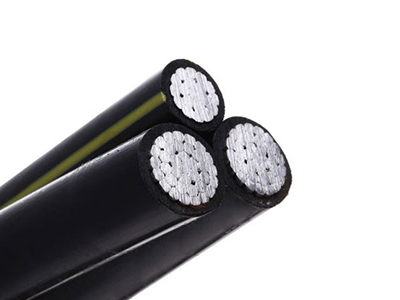
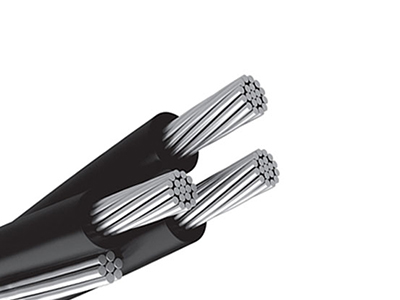
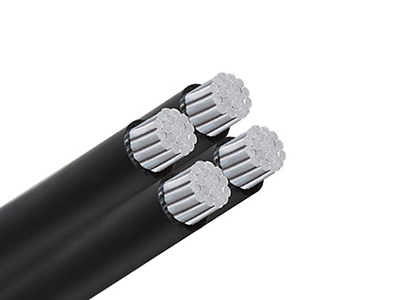
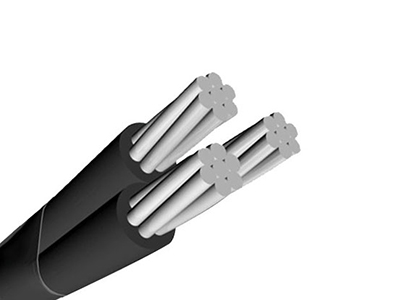
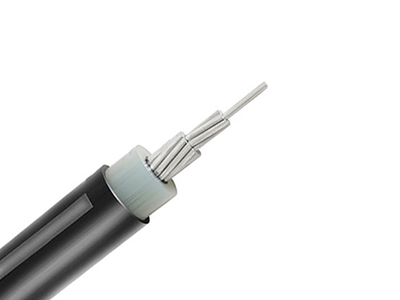
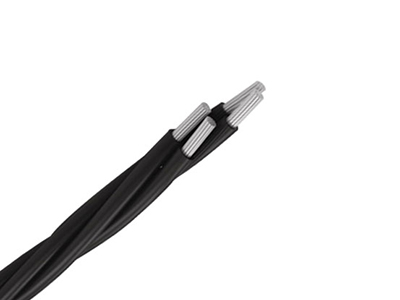
ABC (Aerial Bundled Cables or Aerial Bundled Conductors) are several phase conductors insulated and tightly bundled together with bare neutral conductor for use in overhead power lines. It utilizes the same principles as used for bundled conductors, but are much closer together and each one, except the neutral line, is surrounded by a layer of insulation. This is in direct contrast to the traditional use of uninsulated conductors which are separated by air gaps. LV (Low Voltage) abc aluminum cable are already in use in many countries around the world. Its main advantages include:
– They are safer and more reliable;
– They are cheaper and more aesthetic;
– They are less labor intensive and require less maintenance;
– They require less pruning and tree clearing;
– They eliminate the risk of bush fires initiated by conductor clashing and fallen trees;
– Simultaneous disconnection of all conductors eliminates potentially dangerous fault conditions when overhead power lines are broken by fallen trees or high vehicles.
– They are less susceptible to vandalism and loss through theft.
It provides a higher level of safety in difficult terrain including forest areas, coastal areas, and hilly areas. In climates with a high level of moisture accelerated tree growth becomes a significant problem increasing the risk of bush fires. If aerial bundled conductors are touched by tree branches they will not arc over. There are many types of abc cable, but their application is the same.
ABC cables can be used in the following ways:
• As replacement for bare overhead power lines in rural areas;
• In areas where space is limited such as narrow streets and lanes;
• In forests and woods where there is an increased risk of damage from fallen branches and trees;
• As replacement for bare overhead power lines where prime importance is placed on reliability of supply;
• Where supply voltage with a high degree of stability is required;
• As reinforcement for existing overhead power systems without having to increase voltage;
• In difficult terrain like hilly areas where the cost of installing underground cabling or overhead power lines is very high.
Two types of systems are available namely a Self-Supporting System consisting of 4 cores of compacted aluminium hard drawn stranded conductors; and a Supporting Core System consisting of 3 phase cores. Triplex wire is also an important product of abc cable.
DESCRIPTION
OVERVIEW
Application:
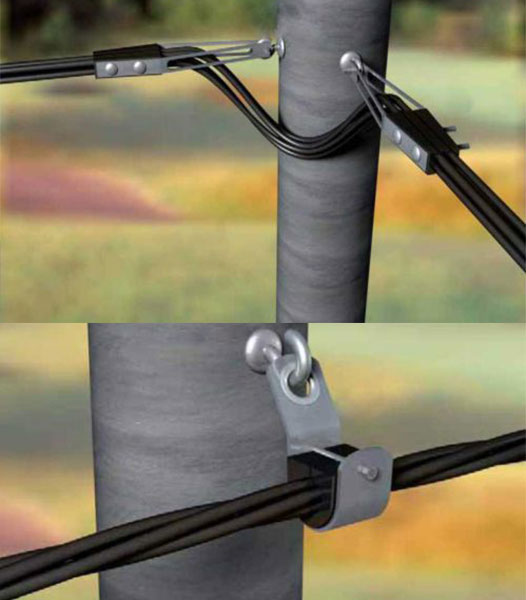
Aerial Bundled Conductor cables can be used to replace bare conductor cables in overhead distribution systems. It is ideal for use in urban areas with congested power distribution and narrow lanes and by-lanes. The flexible system is much easier than conventional overhead power lines to re-route when demanded by changes in urban development plans.
Standards:
Basic design to BS 7870 / TNB Specification(IEC 60502) / HD 626 S1 / NFC 33-209 / AS/NZS 3560-1 standards.
Technical data
Rated Voltage: 0.6/1kV
Test Voltage: 4 Veff kV
Minimum Laying Temperature: -20°C
Operating Temperature: -40°C~ +90°C
Maximum Short-circuit Temperature: 250°C
Maximum Conductor Temperature: 80°C
Minimum Bending Radius: 18×OD
Test Voltage: 4 Veff kV
Minimum Laying Temperature: -20°C
Operating Temperature: -40°C~ +90°C
Maximum Short-circuit Temperature: 250°C
Maximum Conductor Temperature: 80°C
Minimum Bending Radius: 18×OD
SPECIFICATIONS

Low Voltage

UV Resistance

Working Temperature 90℃

Cold Resistant -40℃
CONSTRUCTION
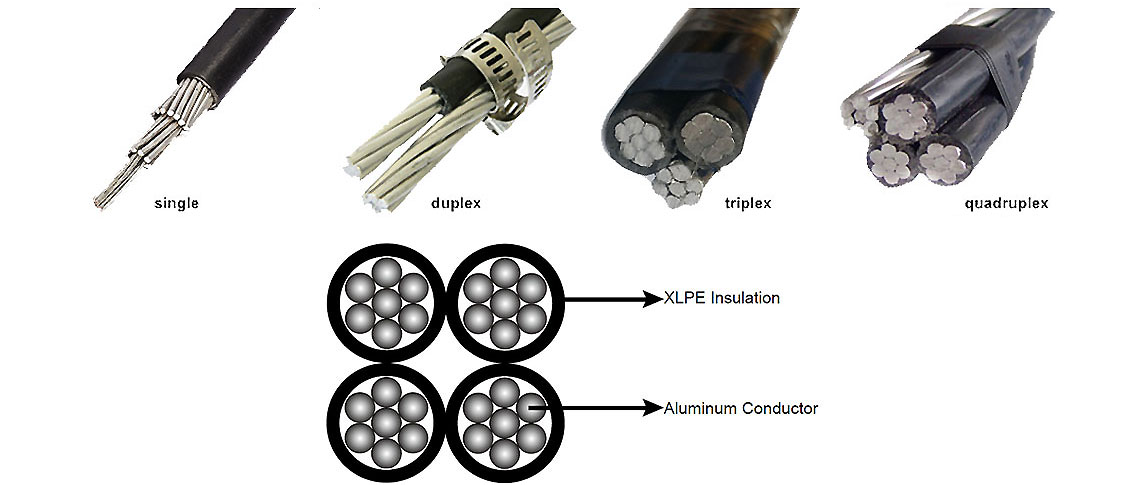
- Conductor:Aluminium conductor, round stranded compressed (RM)
- Insulation:XPLE compound, UV-resistant
- Core Identification:1, 2 resp. 3 raised longitudinal ribs on the surface of the cores. The surface of the neutral core should have at least 12 ribs for cross-sections up to 50 mm^2 and a minimum of 16 ribs for cores above 50 mm^2. In the case of five core bundles the surface of the protective core should be smooth
PARAMETER
- BS 7870
- TNB Specification(IEC 60502)
- HD 626 S1
- NFC 33-209
- AS/NZS 3560 Part 1
| Number of Cores x Nominal Cross Section | Overall Diameter | Weight | Maximum Conductor Resistance | Minimum Breaking Load | Current Rating |
| No.×mm^2 | mm | Kg/Km | Ω/Km | KN | A |
| 1x16 RM | 8.0 | 74 | 1.910 | 2.5 | 72 |
| 1x25 RM | 9.0 | 106 | 1.200 | 4.0 | 107 |
| 1x35 RM | 10.5 | 138 | 0.868 | 5.5 | 132 |
| 1x50 RM | 11.8 | 182 | 0.641 | 8.0 | 165 |
| 1x70 RM | 13.0 | 252 | 0.443 | 10.7 | 205 |
| 1x95 RM | 15.4 | 333 | 0.320 | 13.7 | 240 |
| 1x120 RM | 17.0 | 408 | 0.253 | 18.6 | 290 |
| 1x150 RM | 19.0 | 502 | 0.206 | 23.2 | 334 |
| 1x185 RM | 21.0 | 611 | 0.164 | 28.7 | 389 |
| 1x240 RM | 24.0 | 801 | 0.125 | 37.2 | 467 |
| 2x16 RM | 15.6 | 147 | 1.910 | 2.5 | 72 |
| 2x25 RM | 18.0 | 208 | 1.200 | 4.0 | 107 |
| 2x35 RM | 20.0 | 277 | 0.868 | 5.5 | 132 |
| 2x50 RM | 23.5 | 361 | 0.641 | 8.0 | 165 |
| 2x70 RM | 25.4 | 505 | 0.443 | 10.7 | 205 |
| 2x95 RM | 30.3 | 666 | 0.320 | 13.7 | 240 |
| 2x150 RM | 38.0 | 1004 | 0.206 | 23.2 | 334 |
| 4x16 RM | 18.8 | 286 | 1.910 | 2.5 | 72 |
| 4x25 RM | 21.2 | 430 | 1.200 | 4.0 | 107 |
| 4x35 RM | 24.1 | 553 | 0.868 | 5.5 | 132 |
| 4x50 RM | 27.8 | 746 | 0.641 | 8.0 | 165 |
| 4x70 RM | 31.8 | 1009 | 0.443 | 10.7 | 205 |
| 4x95 RM | 37.8 | 1332 | 0.320 | 13.7 | 240 |
| 4x120 RM | 54.4 | 1632 | 0.253 | 18.6 | 290 |
| 4x50 + 1x25 RM | 31.9 | 814 | 0.641/1.200 | 8.0/4.0 | 165/107 |
| 4x50 + 1x35 RM | 31.9 | 845 | 0.641/0.868 | 8.5/5.5 | 165/132 |
| 4x70 + 1x25 RM | 36.0 | 1105 | 0.443/1.200 | 10.7/4.0 | 205/107 |
| 4x70 + 2x25 RM | 40.0 | 1217 | 0.443/1.200 | 10.7/4.0 | 205/107 |
| 4x95 + 1x25 RM | 41.8 | 1438 | 0.320/1.200 | 13.7/4.0 | 240/107 |
| 4x95 + 2x25 RM | 42.0 | 1544 | 0.320/1.200 | 13.7/4.0 | 240/107 |
| 4x120 + 1x25 RM | 59.0 | 2050 | 0.253/1.200 | 18.6/4.0 | 290/107 |
Contact Us